
OPENING QUESTION: Let's review from last time:
List all the ways that you can recall that WATER is sooooooo critical for the success of a human base/colony on Mars
═══════════════════════════
LEARNING GOAL: I will be able to evaluate how much energy a single person will need to exist in their own living space on Mars during today's class
WORDS O' THE DAY:
- Atmosphere
- Food
- Water
- Shelter (underground)
- Air
WORK O' THE DAY
LET's REVIEW OUR WORK FROM LAST TIME FIRST!
1) SHELTER - Especially underground
Let's take a gander at my favorite National Geographic poster

Notice the importance of living in a lava tube underground...
That is absolutely critical in keeping us safe from radiation from the sun and from deep space
═══════════════════════════
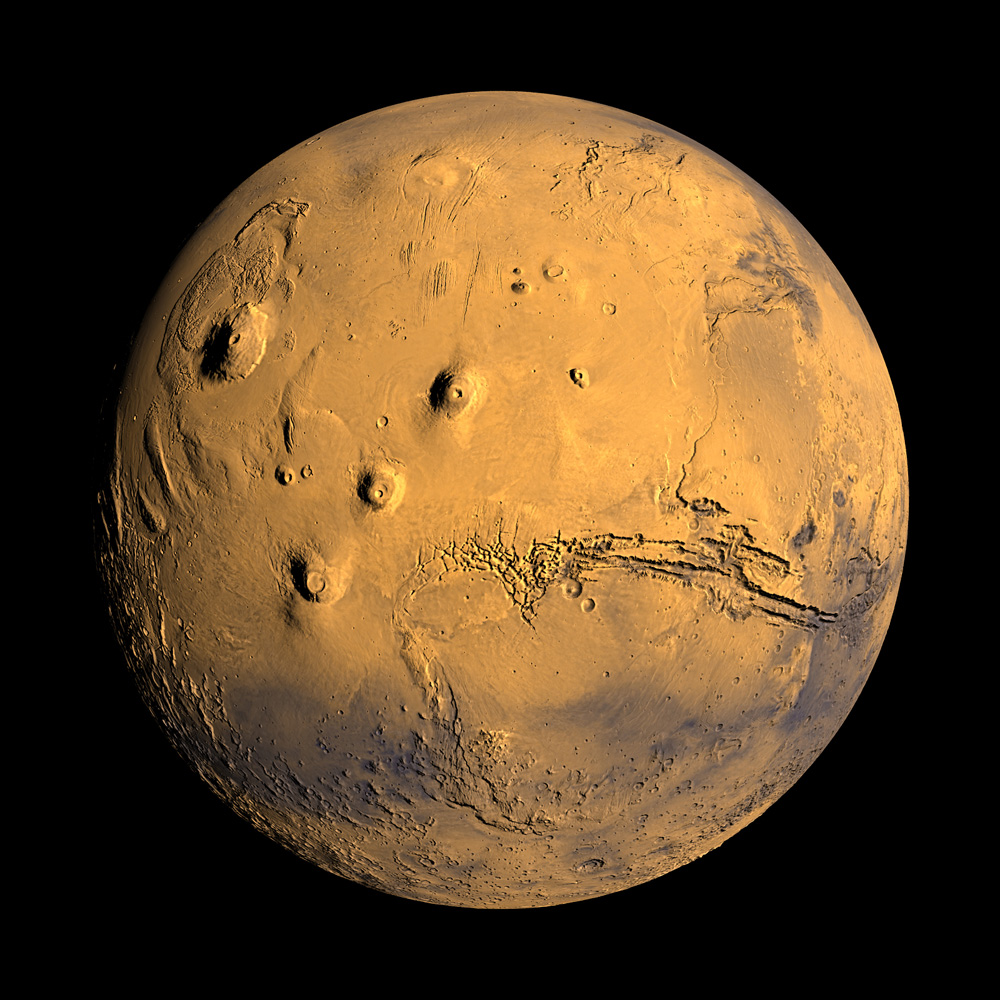
2) WATER
The good news is that we have VERY strong evidence that water exists in *abundance* on Mars and is likely available just a few meters beneath the surface
Why do we care?
- Aside from the obvious (drinking, bathing, washing clothing and such), it may surprise you that water is essential to:
-
Grow plants that will provide us with oxygen AND food
-
provide oxygen and hydrogen by splitting water molecules (H20)
-
Provide a source of rocket fuel (We can rearrange the the atoms in water to make rocket fuel!)
-
═══════════════════════════
3) FOOD
We MUST be able to grow our own food on Mars. That means water, artificial lighting (the sun is about half is bright on Mars so growing on the surface is out), temperature control, water and of course soil.
We recently learned that the soil on Mars contains a nasty chemical that is toxic to humans.... we *think* it will be a fairly easy matter to filter that out.
4) AIR
*should* be fairly straight forward:
-
Grow plants that release oxygen and take in the cardon dioxide we breathe out
-
Split water molecues to obtain oxygen molecules
5) ENERGY/POWER
As you might expect, having a reliable energy source is a MUST for a successful base on Mars.
- The temperature is about what we'd expect in Antarctica... clearly we need to be warmer than THAT
- Think about all the ways we depend on energy here in our day-to-day life on Earth... now imagine we are living in Antarctica....'cept we can't breathe the air *DOH*
- We need to be able to provide energy for our machinery
- We need to be able to break water into hydrogen and oxygen
Solar panels are a good choice, but once again, recall that the sun isn't as bright on Mars so we'd need twice as many solar panels to get the same results as on Earth
Dust storms are a *thing* on Mars and the nasty ones can last months... clearly we'll need another source of power
- Nuclear reactors (fairly small, fairly basic) will almost certainly be required
═══════════════════════════
═══════════════════════════
Since energy is really the primary basis for EVERYTHING on Mars, let's spend some more time getting acquainted with that:
Many of us have electric generators at home for when the power goes out (Which it DOES in our part of the world from time to time). Here's what mine looks like:

Notice that it says 4000 Watts in next big letters and then 3500 Watts in somewhat smaller lettering. That means that the generator can reliably produce 3500 Watts of power at any time.
But what does THAT mean???
Let's discuss...
═══════════════════════════
A WATT is a complex unit of measure... it has to do not with how much energy is being used but how much energy is being used PER second.
Take a few moments and imagine you are stuck at home in the winter time without power.
You fire up the generator and NOW you have power (YAY!)
But what can you do with that?
Let's start by making a list of every electrical device you used from the time you woke up until the time you left your house...
Now let's go online and find the *rating* (how many Watts) each of those items requires...
Now let's add a space heater... go and find one of those that will work in your room quite nicely